There are two broad classes of such responsesantibody responses and cell-mediated immune responses and they are carried out by different classes of lymphocytes called B cells and T cells respectively. Antibodies recognize and latch onto antigens in order to remove them from the body.

Single B Cell Technologies For Monoclonal Antibody Discovery Trends In Immunology
Describe how a human can produce different antibodies.
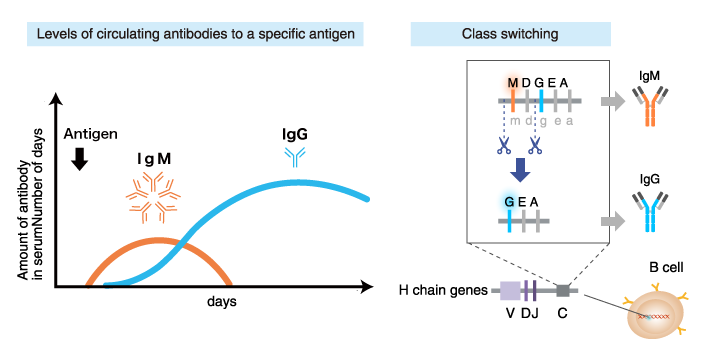
. B cells develop from stem cells in bone marrow. By this mechanism alone a human can produce 287 different V L regions 200 κ and 116 λ and 8262 different V H regions. The development of clones of B and T cells against a specific antigen.
Describe how a human can produce different antibodies. When B cells become activated due to the presence of a particular antigen they develop into plasma cells. These cells trigger the B lymphocytes to produce antibodies.
Although detailed mechanics of the immune response are beyond the scope of this site it is useful in the context of developing a custom antibody to have an overview of how antibodies are produced by the immune system. Similar to TCRs T cell receptors and BCRs B cell receptors antibody diversity is produced by the mutation and recombination of approximately 300 different gene segments encoding the light and heavy chain variable domains in precursor cells that are. T lymphocytes attack antigens directly and help control the immune response.
These cells trigger the B lymphocytes to produce antibodies. When an antigen is detected several types of cells work together to recognize and respond to it. Diagram an IgG antibody labeling the Fab Fc regions H chains L chains hinge region.
These cells trigger the B lymphocytes to produce antibodies. Antibodies are produced by a type of white blood cell called a B cell B lymphocyte. A foreign substance that invades the body is called an antigen.
Indicate where antigen binding occurs and where binding to the FcεRI receptor occurs. Antibody also called immunoglobulin a protective protein produced by the immune system in response to the presence of a foreign substance called an antigen. Describe how a human can produce different antibodies.
Class switching occurs by a mechanism called class switch recombination CSR binding. In principle having the details of the antibody repertoire in individuals and in different populations would enable important scientific insights as well as a wide range of medical applications. When an antigen is detected antibodies are produced to fight off infection.
Describe how humans produce antibodies against a pathogen such as Salmonella. A foreign substance that invades the body is called an antigen. B cells make the antibodies that neutralize or kill specific invaders.
Describe four outcomes of an antigen-antibody reaction. A wide range of substances are regarded by the body as antigens including disease-causing organisms and toxic materials. Plasma cells create antibodies specific to a certain antigen.
The receptors of B-cells are antibodies which bind to the antigenic determinants. Causes antigens to clump together - more easily digested by phagocytes eg. Antibody Diversity 1015 different B-cell receptors How many genes in human genome.
Explain why after infection there is a delay before a steep rise in concentration of antibodies in the blood. They also release chemicals known as cytokines which control the entire immune response. Class switch recombination is a biological mechanism that allows the class of antibody produced by an activated B cell to change during a process known as isotype or class switching.
12 points It is estimated that humans can produce 1015 to 1018 different antibodies. The production of variable regions of light and heavy antibody genes by DNA rearrangement The combination of gene fragments prior to binding antigen produces the variable coding sequence for the antibody gene. Antibodies attach to a specific antigen and make it easier for the immune cells to destroy the antigen.
Mechanism of antibody diversity. Antibodies and their responding antigens fit. Somatic recombination during embryonic development Primarily through Gene rearrangement mix and match Susumu Tonegawa Nobel Prize 1987.
The large diversity of antibody structure translates into the large diversity of antigens that antibodies can bind and recognize. B cells can be grouped into distinct clones each of which produces antibodies with a unique set of target-gripping structures. When it binds to a pathogen it prompts the.
In antibody responses B cells are activated to secrete antibodies which are proteins called immunoglobulins. Antibodies and their responding antigens fit together like a key and a lock. IgM is one of the first antibodies called in to fight infection.
Each antibody binds with a different antigen. Once the B lymphocytes have produced antibodies these antibodies continue to exist in a persons body. Two different white blood cells B cells and T cells are involved in the bodys adaptive immune response.
IgE is the antibody responsible for allergic reactions. IgE also helps to fight parasitic infections. It has been estimated that the human body can develop immune response against as many as 100 million or more different antigenic determinants which means that the body can produce as many different clones of B-lymphocytes each carrying a specific receptor.
When an antigen is detected several types of cells work together to recognize and respond to it. When an antigen is detected several types of cells work together to recognize and respond to it. - Different strains can circulate each year - To ensure enough memory cells are present.
Mutation can also increase genetic variation in antibodies. This is the specific attack that the body launches against an invader after an initial general immune response which includes inflammation. Clonal deletion eliminates harmful B cells.
In people with autoimmune diseases IgG can trigger a symptom flare. B lymphocytes become cells that produce antibodies. IgE binds to an allergen triggering a release of histamine which causes allergy symptoms.
The combinatorial diversification resulting from the assembly of different combinations of inherited V J and D gene segments just discussed is an important mechanism for diversifying the antigen-binding sites of antibodies. A foreign substance that invades the body is called an antigen. Stanford researchers describe how the human body creates different classes of antibodies This first detailed map of the bodys antibody production could suggest new treatment options for immune.
When an organisms immune system encounters a foreign molecule typically a protein for the first time specialized cells such as macrophages and. With respect to antibody production and their ability to bind antigens describe how an. The immune system creates billions of different antibodies with a limited number of genes by rearranging DNA segments during B cell development prior to antigen exposure.

Antibody Mediated Inflammatory Disorders
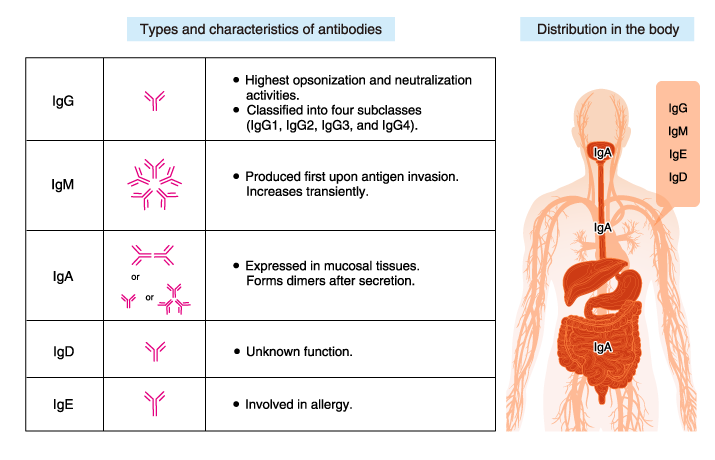
Types Of Antibodies Mbl Life Science Japan
Types Of Antibodies Mbl Life Science Japan



0 Comments